Cassity Bracken
Chinook Writer
For some Casper College students, getting to class is a quick 5-minute drive and for others the commute means spending more than half an hour on the road before the school day even begins. Although both students choose to travel instead of living on campus, their experiences display how the distance between home and college can shape student life in different ways. Alice Lareau, a 21-year-old psychology major, drives from her off-campus home to school. Her commute is about 5-minutes. For an 18-year-old communication major, Cadence Miller, getting to class means commuting about 35-minutes from Glenrock.
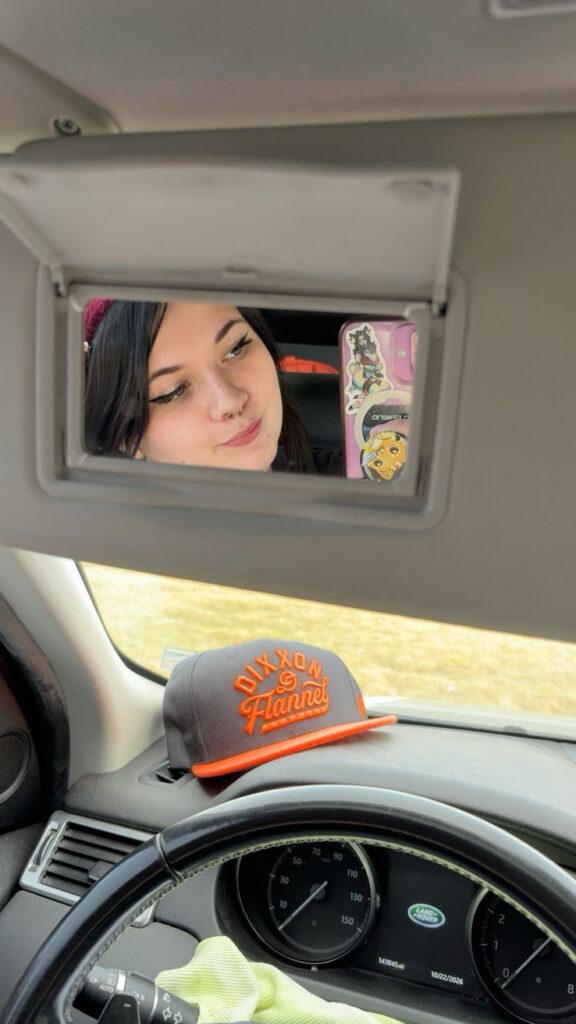
Cadence Miller is shown taking a photo in her car. She commutes to campus for classes.
For Miller, staying home involved more than just saving money. She wanted to spend a few more years with her family before moving on to a university or entering the workforce. She also said she juggles responsibilities outside the classroom, including coaching drama in Glenrock, being a part of the forensics club on the college campus, and working another job.
On the other hand, for Lareau, the decision to commute proved relatively simple. Living near the campus, the option to move into the dorms did not seem necessary, especially for an added cost.
Though wanting to stay with her family was a major factor in Miller’s decision to commute, the cost of living on campus also weighed in on her decision. Miller expressed that she compared the expense of living in the dorms with the cost of driving back and forth. She found commuting to be the more affordable option.
The short drive that Lareau takes makes it easy to go back-and-forth between school and home. She said she plans her schedule around school to avoid any unnecessary problems and sometimes stays on campus between classes to finish homework.
“I just live really close,” said Lareau.
Both students said saving money was a big part of their decision to live off campus. However, their experiences show that the distance students travel can affect more than just how early they have to wake up to get to class on time.
For Lareau, commuting is convenient enough that it rarely causes problems. Between weather and traffic, making it to class on time for her is a breeze.
Miller considers more before leaving home. A 35-minute drive means allowing extra time in the morning and thinking about what the roads might look like, especially as Wyoming weather changes.
Miller mentioned that one of the disadvantages of her commute is waking up early and on time.
Even a small delay in the morning can affect when she arrives to class.
Miller’s schedule takes more planning. On Mondays and Wednesdays, she often finishes class around 1 p.m. but does not have her club practice until later in the afternoon. Instead of driving all the way back to Glenrock and then returning to campus, she said she spends some time at her sister’s house near the college.
Still, both students found ways to make commuting fit into their schedules. While the practical side of commuting matters, the experience of being a college student involves more than getting to class on time. Making friends, attending events, and feeling like a part of the campus community is also an important part of college life.
Miller said finding her place in the community and making friends ended up one of the more difficult parts of her decision to commute.
When she first joined the college’s forensics team, she noticed many of the other students already knew one another.
Miller said previously established friendships made it harder to feel like she was part of the group at first. While she eventually developed friendships, Miller said she worried initially that living off campus would make it more difficult to meet new people and develop friendships.
“I was just kind of there for my classes, my practice, and then I dipped out,” Miller said.
Her experience highlights one of the differences between living on campus and commuting. Students who live in the dorms may have more opportunities to spend time together after class while commuters often have to make a separate effort to stay and socialize.
Miller said she sometimes feels as though college activities are intended for students who live on campus, even though commuters can attend them too. Even if Miller is interested in campus events, she said she’s not always able to attend because of her commute, work, and coaching responsibilities. After a full day of classes, going to an event that starts at 7 p.m. likely involves another drive to and from and then getting home for good much later than usual.
Miller believes the college could make some activities easier for commuters to attend by offering more events during the day. Midday activities, for example, could give students a chance to participate while they are already on campus.
Lareau, however, said she still feels connected to campus even though she lives at home; she has friends who live in the dorms and receives emails about activities happening around the college. She does not feel that commuting negatively affected her friendships or her overall college experience.
When asked whether she had missed campus events because of commuting, Lareau explained that attending is a matter of personal choice.
“If I want to go, I’ll go,” Lareau said.
She acknowledges that students who live on campus may hear more about activities simply because they are always surrounded by other students, but she believes commuters still have equal opportunities to get involved.
Ultimately, choosing between commuting and living on campus comes down to what works best for each student. Saving money and staying close to family can make commuting worthwhile, but the time spent traveling and the effort required to stay involved can also matter. Neither student suggested that living on campus is the right choice for everyone. Miller said students should consider their personality, finances, and living preferences when deciding where to stay. She said students who enjoy meeting people and spending time with others might benefit from living on campus, while commuting may be a better fit for those who prefer their own space. Their experiences show that college life does not look the same for everyone. Some students spend their time outside class in the dorms, while others head home when the school day ends; both are finding their own way to make college work for them.
Not only when deciding whether to commute or live on campus, you must consider the big factors but you should also consider the small factors, such as where you want to take a nap.
“My place to take a nap is 35 minutes away,” Miller said.
For commuters like Miller, sometimes even a quick nap requires a little extra planning.